Congratulations on building your new home! You’ve spent countless hours choosing the perfect floor plan, picking out finishes, and ensuring the electrical and plumbing systems are flawless. But have you given the same level of attention to your home’s nervous system? In today’s hyper-connected world, a well-designed network infrastructure is no longer a luxury—it’s an essential utility, as critical as running water and electricity. Without this digital backbone, your dream home might struggle to keep up with the demands of modern life.
This guide will walk you through the importance of planning your home network during the construction phase. We’ll explore why a solid foundation is paramount for everything from streaming 4K movies to running a sophisticated smart home, and how getting it right from the start can save you thousands of dollars and countless headaches down the road.
Why Your New Home’s Network is as Crucial as its Foundation
Think about how much of your daily life relies on a stable internet connection. Remote work, online learning, video calls with family, home security systems, streaming services, and a growing army of smart devices all depend on a fast, reliable network. A robust network infrastructure is paramount when building a new home, transitioning from an afterthought to a core component of a functional, modern household.
A weak or poorly planned network—often one that relies solely on a single Wi-Fi router from your internet provider—leads to frustrating digital traffic jams. Without a solid foundation, even the most advanced smart devices can suffer from delayed responses, interrupted streams, and connectivity issues. This is why a strong network is important for a smart home; it ensures all your devices can communicate instantly and effectively, providing the seamless experience you expect. A detailed house blueprint with structured network wiring, including Ethernet and fiber optic cables, mapped out to key rooms and a central network closet.
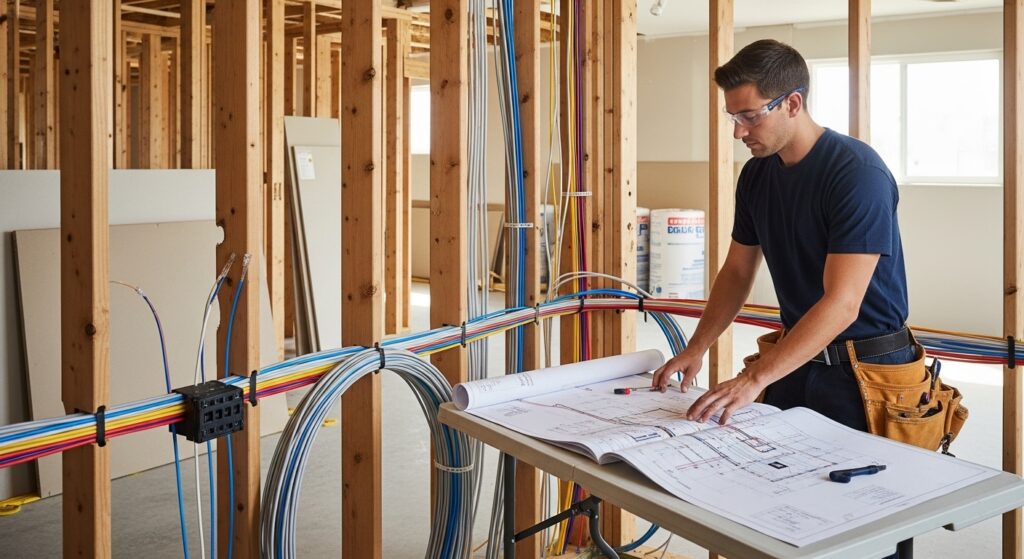
The Core of a Modern Home: Understanding Structured Wiring
So, what’s the solution? The answer is structured wiring. But what is structured cabling and why is it essential for new homes? Simply put, structured wiring is a planned, centralized system of low-voltage cabling (like Ethernet and coaxial) that runs from a central distribution point—your network closet—to various outlets and locations throughout your home. It’s the interstate highway system for your home’s data, while Wi-Fi is like the local city streets.
Benefits of Structured Cabling in New Construction:
- Unmatched Reliability and Speed: A wired Ethernet connection is faster and more stable than Wi-Fi, free from interference from your neighbor’s network or household appliances. This is crucial for home offices, media centers, and gaming setups.
- Superior Wi-Fi Coverage: By running Ethernet cables to strategic locations for Wireless Access Points (WAPs), you can eliminate dead zones and ensure seamless, powerful Wi-Fi coverage across your entire property, including the patio and garage. This is the secret to designing Wi-Fi for new build homes that actually works.
- Future-Proofing Your Investment: Technology evolves rapidly. A structured wiring system allows you to easily adapt to future advancements. Running conduits (plastic tubes) alongside your cables makes it simple to pull new wires, like fiber optics, years from now without tearing open walls. This is how you future-proof your home network during construction.
- Increased Property Value: A professionally installed home network is a major selling point for tech-savvy buyers, demonstrating foresight and a commitment to quality construction.
Planning Your Future-Proof Home Network: Key Considerations
When you’re in the building phase, you have a golden opportunity to create the perfect network. Here’s what you should consider when planning a home network for a new house.
Wired vs. Wireless: A Hybrid Approach
The best home network setup for multiple devices isn’t an “either/or” choice between wired and wireless; it’s a strategic combination of both. Plan for hardwired Ethernet connections for stationary, high-bandwidth devices like smart TVs, desktop computers, gaming consoles, and security cameras. This frees up your Wi-Fi bandwidth for mobile devices like laptops, tablets, and smartphones, resulting in a better experience for everyone.
Choosing the Right Cables: Cat6 vs. Fiber Optic
For most residential applications, Cat6 or Cat6a cabling is the gold standard, capable of delivering gigabit-plus speeds that will serve your needs for years to come. When considering Cat6 vs fiber optic cabling new home, Cat6/6a offers the best balance of performance and cost. However, running a fiber optic line alongside your main Ethernet runs to key locations (like the office or entertainment center) is a savvy way to future-proof for the next generation of internet speeds. If you live in a rural area, a professional installation can also ensure your system is optimized for services like Starlink.
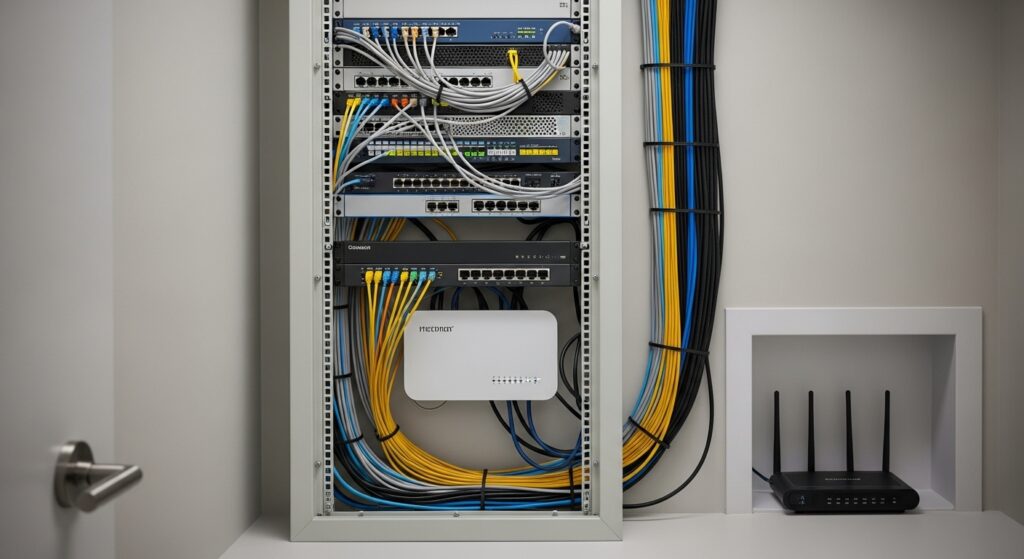
The Brains of the Operation: Planning Your Network Closet
Every great network needs a central hub. Planning a network closet for a new house is critical. This doesn’t have to be a full room; a dedicated space in a utility room, basement, or a larger closet works perfectly. It should be climate-controlled and have ample power outlets. This is where your modem, router, network switch, and patch panel will live, creating a single point of management for your entire home’s connectivity. A professional installer from our team can help design the perfect solution for your space. Low Voltage Installation Services
The Investment: What Does it Cost?
A common question is, “How much does it cost to install Ethernet in a new home?” While the cost varies based on the size of your home and the scope of the project, the crucial thing to remember is that installing network cabling during construction is dramatically cheaper—often by 70% or more—than retrofitting it after the drywall is up. The cost of running a few extra cables when the walls are open is minimal. Think of it not as an expense, but as an investment in your home’s functionality and long-term value, much like upgrading your countertops or appliances.

Conclusion: Build a Home That’s Ready for Tomorrow
Building a new home is your chance to get things right from the ground up. By prioritizing a smart home network design with structured wiring, you’re not just installing some cables; you’re laying the digital foundation for your family’s future. You’re ensuring that your home can handle the ever-increasing demands of connected living, from 8K streaming and virtual reality to technologies we haven’t even imagined yet.
Don’t let your network be an afterthought. Plan for it, invest in it, and build a home that’s as smart and capable as the life you plan to live in it. Ready to design the digital backbone for your dream home? Click Here to schedule a free consultation with our low-voltage experts today.